


What Makes a Resort Ideal For Reef Access
The top island resorts with reef access boast a thriving house reef just a short swim from the beach. This feature is paramount, letting guests snorkel in the morning, enjoy lunch, and head out again without arranging boat trips or wasting time travelling.
A resort’s reef access comes down to three things: how close the reef is to the beach, how sheltered the water is, and whether the resort offers guided sessions for guests who aren’t confident swimmers.
What is the difference between a house reef and fringe reef?
A house reef is a reef you can reach directly from a resort’s beach or jetty, with no boat required. A fringing reef is a coral formation that grows close to the shoreline, often forming a shallow lagoon between the beach and the reef edge.
The distinction matters when you’re comparing resorts. A house reef gives you flexibility and independence. A nearby fringing reef may still require a short boat transfer, which adds cost and scheduling.
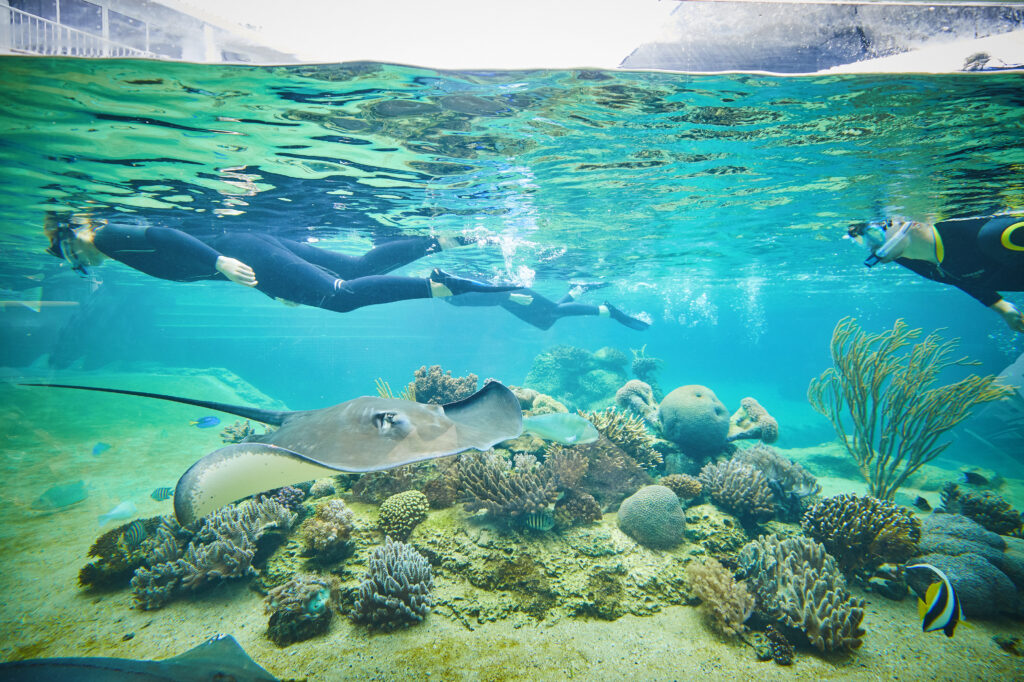
Daydream Island, for example, has natural fringing coral beaches, such as Lover’s Cove, and features an artificial Living Reef, which is a free-form coral lagoon that serves as a central house-reef-style attraction for families and their kids.
Comparing the best snorkelling resorts in the Whitsundays
Choosing the best snorkelling resorts in the Whitsundays depends on how you want to spend your days. Some resorts suit families who need shallow, calm water. Others appeal to couples chasing quiet coves and long, unhurried swims.
The Whitsundays sit within the Great Barrier Reef Marine Park, so access rules, moorings and guided-operator requirements apply across the region. Knowing this before you book is important, as it shapes what’s included and what costs extra.
Learning about reef proximity and access quality
Proximity is the biggest factor in reef access. A resort where the reef is a short swim from the sand removes transfer time, boat fees, and weather risk. Access quality depends on water clarity, wind shelter, and whether the reef is a living coral system or a sandy patch with scattered fish.
Here’s how the main access types compare:
| Access Type | Travel Time | Best For | Typical Cost Impact |
| Fringing reef from the shore | Immediate | Beginners, families | Usually included |
| Guided snorkelling or pontoon experience | 10-30 minutes | Confident swimmers | Often a paid add-on |
| Boat trip to outer reef | 1-3 hours | Experienced swimmers | Premium day-tour pricing |
Family-friendly and couple-focused options to consider
We recommend that families start at shallower entries on the first day. This helps them get familiar with the water and see what the house reefs offer. From there, and based on experience, you can explore options to access the outer reef.
Couples, on the other hand, want privacy and the chance to explore a beach on their own. For that, we recommend a boat trip out to the outer reef, with a sunrise, lunchtime, or sunset reef expedition.
Pro tip: Ask whether the resort’s included snorkelling gear comes in children’s sizes and whether guided sessions run daily. Many properties only run guided reef sessions on set days, which can catch families out.
When’s the best time to visit the Whitsundays for Snorkelling?
The best time to visit the Whitsundays for snorkelling runs from roughly June to October, when the dry season brings lighter winds and clearer water. Visibility is generally most reliable during these months.
Summer, from December to February, brings warmer water but also the wet season. Stinger season typically runs from November to May, and during this period many operators require swimmers to wear protective stinger suits. Always check the latest marine warnings before entering the water.
The shoulder months, around May and November, often offer a good balance: fewer crowds, comfortable temperatures, and reasonable conditions. If your dates are flexible, aim for the middle of the dry season.
Snorkelling safety tips for beginners
We always start with one rule: never swim alone, and never overestimate your comfort in open water. Most incidents involve fatigue, panic or drifting away from the group, not the reef itself.
If it’s your first time in the ocean (for kids or people who aren’t great swimmers) or snorkelling, we recommend getting familiar with our house reef at Lovers Cove.
Things to remember:
- Wear a stinger suit during stinger season, as advised by local operators.
- Skipping the stinger suit because the water looks calm is a common mistake.
- Check tide and wind forecasts before entering the water
- Stay within the marked swimming zone at your resort
- Practise breathing through the snorkel in shallow water first
- Use a float or noodle if you’re not a confident swimmer
- Never touch coral or marine life, and keep a respectful distance
- Tell someone where you’re going and when you’ll return
Costs and what to expect from Whitsunday Island resorts
Island resort pricing varies widely depending on the season, room type and the level of inclusions. Rather than quoting fixed figures, it’s worth understanding the two main structures before comparing.
An all-inclusive package bundles accommodation, most meals and selected activities into one rate. A room-only or bed-and-breakfast rate keeps the upfront cost lower but charges separately for meals and reef trips.
Snorkelling gear hire, guided reef sessions, and outer-reef boat trips are extras to check once you arrive on the island. Ask directly whether reef access is included or priced separately, and confirm current rates and inclusions on the resort’s website or by requesting a quote for your dates.
Why Daydream Island offers outstanding reef access
The resort features an on-site Living Reef with over 100 species of sea creatures, letting guests explore a living marine environment without leaving the property.
For families, that’s the difference between a rushed day trip and an easy morning swim. The island sits just a 30-minute ferry ride from the mainland, so transfers are straightforward, and the secluded setting keeps the atmosphere calm rather than crowded.
Guests can pair reef time with swimming, watersports, snorkelling and rainforest treks, then unwind by the lagoon. The 240 rooms and suites overlook tropical gardens or the Whitsundays, and the Daydream Island Guest Lounge gives arriving guests a comfortable place to settle before check-in.
Frequently Asked Questions
Several Whitsunday Island resorts offer direct reef access. Daydream Island stands out for its on-site Living Reef, home to more than 100 species of marine life, and for easy boat access to the outer Great Barrier Reef. When comparing resorts, look for those with a house reef or fringing reef just off the beach so that you can snorkel without a long boat trip. Always check whether reef trips are included or cost extra.
A house reef is a coral reef located just off a resort’s beach, letting guests snorkel from the shore without a boat. This feature offers convenient, affordable access to marine life at any time. It is especially suitable for families with young children or less confident swimmers, as they can stay in shallow water. Daydream Island’s Living Reef provides a comparable experience with guided educational sessions.
Yes, several Whitsunday resorts cater to families while offering reef access. Daydream Island is a strong choice, with 240 rooms and suites, a lagoon, and activities like swimming, snorkelling, and rainforest treks. The resort’s Living Reef provides safe, supervised marine education for children. When booking, ask about kids’ clubs, shallow snorkelling areas, and whether they provide life jackets, as these details make a big difference for young families.
Many island resorts provide snorkelling gear, either included in the stay or for hire. Daydream Island offers snorkelling as part of its activity range, but it is wise to confirm what is included before you book. Some resorts charge a daily rate for masks, fins, and stinger suits. If you have your own well-fitted mask, bringing it can improve comfort. Always check whether guided snorkelling tours are included in your package or cost extra.